
PERMACULTURE PRINCIPALS
There are 12 principals that tie up permaculture and you need to know them
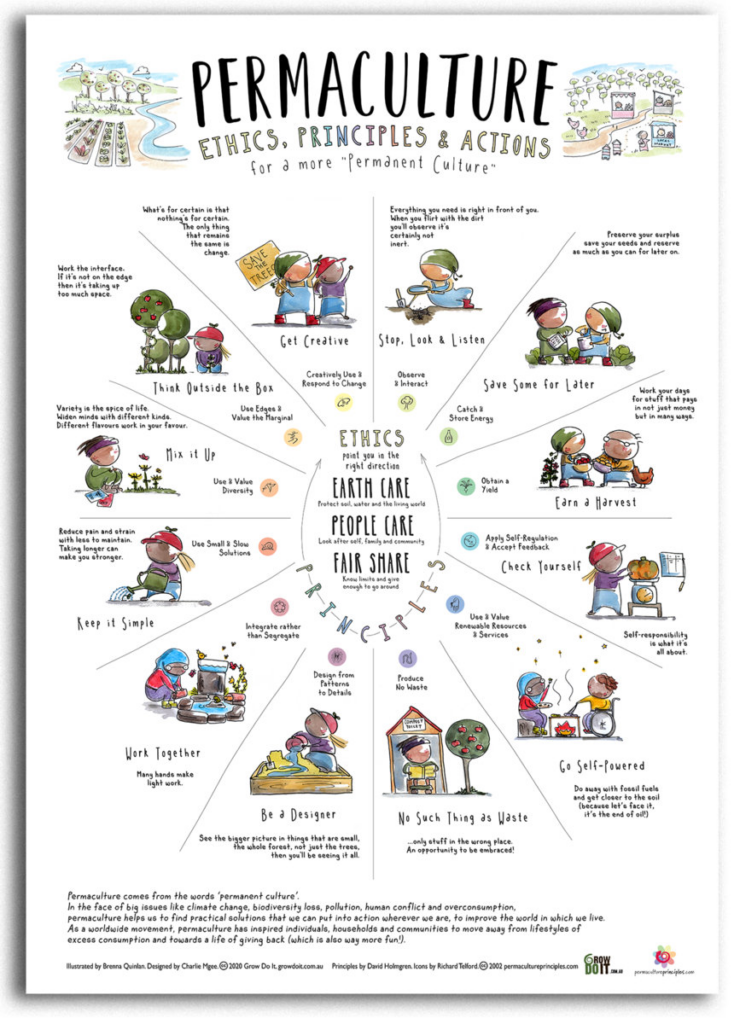
- Observe and Interact, spend time observing the natural ecosystem and how it works before making changes to it.
- Catch and store energy, create and develop a system that will store water or rotten crops and sun to benefit your garden. Example: Tie a pipe to your fence, about 40 cm long, create a heavy material that can easily fit inside that pipe and tie a rope or string to the end of the heavy material. Get something that has tiny holes in it and secure it to the bottom end of the pipe maybe some mesh or the inside of a seive. Then reuse an old plastic bottle and glue that to the bottom end of the pipe. Once installed put produce that you don’t need inside the pipe and put the heavy material on it. this will squash the produce creating a liquid that will go through the holey material and into the plastic bottle, meaning you can use the liquid as fertaliser for crops.
- Obtain a yield, ensure that the plants you plant give you rewards back.
- Apply self regulation and accept feedback, by responding to environmental cues.
- Don’t produce any waste, use all the resources around you and use them wisely.
- Pay attention to detail and observe patterns, step back from your garden and observe natural patterns to help form the backbone of your design.
- Make the use of natural resources get larger by using solar energy, and wind energy.
- Integrate rather than segregate, plant and use materials in ways that they will work together to create a living ecosystem.
- Use slow solutions, systems should be maintained easily so don’t create fast paced solutions.
- Use diversity, diversity exploits the unique nature of the ecosystem
- Value the perimeter, the intersection of two environments is often the most productive
- Be creative and respond to change well, observe what is happening and then interact at the right time to adapt changing conditions.